
Smart Cameras vs PC-Based Machine Vision Cameras: Which is Better?
페이지 정보
작성자 Lachlan 작성일26-07-14 03:21 조회4회 댓글0건관련링크
본문
Which imaging architecture actually delivers the throughput, accuracy, and uptime your production line demands: a self-contained smart camera or a PC-based machine vision system? Should an integrator standardize on one platform across an entire facility, or is a hybrid approach more realistic when inspection tasks vary from simple presence checks to sub-pixel dimensional measurement? These questions surface constantly during the specification phase of any automation project, and the answer depends less on brand preference and more on processing load, environmental constraints, and long-term maintainability.
Choosing between the two is rarely a matter of one being universally superior. Smart cameras integrate the sensor, processor, and I/O into a single housing, while PC-based machine vision systems separate the camera from a dedicated computer running the analysis software. Each approach carries distinct implications for cost, scalability, and serviceability on the factory floor, and understanding those trade-offs is what separates a smooth deployment from a recurring maintenance headache. Clear View Imaging
What Exactly Distinguishes Smart Cameras from PC-Based Systems?
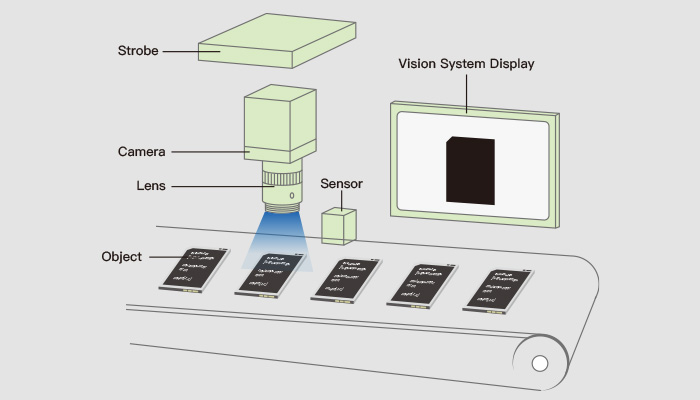
A smart camera is best understood as a compact inspection appliance: the imaging sensor, an embedded processor (often an ARM, DSP, or FPGA core), memory, and digital I/O all live inside one enclosure, with software often burned into firmware or configured through a lightweight onboard interface. There is no separate industrial PC to rack-mount, no frame grabber card to install, and typically no full operating system to patch and secure. This self-contained design is analogous to a digital multimeter compared to an oscilloscope tethered to a laptop: one is purpose-built and immediate, the other is flexible but requires a supporting stack.
PC-based machine vision cameras, by contrast, are essentially high-quality image sensors that hand raw frames off to an external computer for processing. That computer might be a rack-mounted industrial PC, an embedded vision controller, or even a standard desktop running specialized software. The camera itself contributes resolution, frame rate, and interface bandwidth (GigE Vision, USB3 Vision, or Camera Link, for instance), while the heavy computational lifting - edge detection, pattern matching, deep-learning inference - happens on the PC's CPU or GPU. This separation of imaging hardware from processing hardware is the defining architectural difference, and it cascades into nearly every other consideration below.
Which Platform Wins on Raw Processing Power and Inspection Complexity?
When a task involves counting parts on a conveyor, verifying label presence, or checking simple geometric tolerances, a smart camera's onboard processor is usually sufficient. Modern smart cameras built around efficient embedded processors can execute blob analysis, edge-based measurement, and basic OCR at rates matching typical conveyor speeds without breaking a sweat. Their limitation emerges when the inspection task escalates in complexity - multi-camera 3D reconstruction, high-resolution deep-learning defect classification, or simultaneous processing of several megapixel images per second - where the embedded processor simply runs out of headroom.
PC-based machine vision systems scale with the computer behind them. Swap in a more powerful CPU or add a GPU, and the same camera can suddenly support convolutional neural network inference for cosmetic defect detection or handle multi-camera stereo vision for robotic bin-picking. This scalability is the primary reason system integrators lean toward PC-based architectures for complex or evolving inspection requirements: the camera stays the same, but the processing capability grows with the software and hardware behind it. As one veteran machine vision consultant observed in an internal training document, "the camera captures the truth, but it's the processor that interprets it" - a reminder that image quality alone never guarantees inspection accuracy. Clear view Imaging
How Does Each Option Handle Harsh Industrial Environments?
Industrial floors bring vibration, temperature swings, washdown cycles, and electromagnetic interference - none of which are kind to delicate electronics. Smart cameras, being sealed single-unit devices, often achieve IP67 or higher ingress protection ratings out of the box, and because there is no separate PC chassis with cooling fans or exposed cabling, there are fewer failure points exposed to contaminants. This makes them a natural fit for food and beverage lines requiring frequent washdown, or for compact robotic end-effectors where space and weight are tightly constrained.
PC-based systems demand more careful environmental engineering. The camera itself might carry a robust IP-rated housing, but the industrial PC driving it typically needs a sealed or fan-cooled enclosure, vibration-dampened mounting, and shielded cabling to prevent GigE or USB signal degradation over longer cable runs. None of this is prohibitive - industrial PCs rated for extended temperature ranges and shock resistance are widely available - but it adds engineering steps and potential points of failure that a smart camera bypasses entirely by design.

What Does Each Architecture Actually Cost Over the System's Lifetime?
Upfront pricing tells only part of the story. A smart camera might carry a higher per-unit cost than a comparable PC-based camera alone, but it eliminates the need for a separate industrial PC, frame grabber, cabling infrastructure, and often licensing fees for full-featured vision software. For a single inspection station - say, verifying weld seam consistency on one robotic arm - this bundled pricing frequently makes the smart camera the lower total-cost option.
PC-based systems shift the economics when multiple cameras share one processing unit. Suppose a packaging line requires six inspection points: three checking fill levels, two verifying label placement, and one performing final carton integrity checks. A single industrial PC with sufficient GPU capacity can often drive all six PC-based cameras simultaneously, distributing the processing cost across the entire line rather than duplicating a full processor in every camera housing. In that scenario, six smart cameras would mean six redundant processors, while six PC-based cameras plus one shared PC can substantially lower the blended per-station cost - sometimes by a meaningful margin once software licensing is amortized across all six stations. ClearView Imaging

Consider a simplified illustration: if a smart camera costs the equivalent of 1,800 currency units fully loaded, six stations total 10,800 units. If PC-based cameras cost 900 units each (5,400 total) and one shared industrial PC with software costs 4,000 units, the total comes to 9,400 units - a modest but real saving that grows more favorable as station count increases. This is precisely why multi-camera lines in automotive or electronics assembly frequently standardize on PC-based architectures, while isolated inspection points elsewhere on the same plant floor might still use smart cameras.
| Attribute | Smart Camera | PC-Based System |
|---|---|---|
| Processing scalability | Fixed, limited by onboard chip | Scales with CPU/GPU upgrades |
| Environmental sealing | Often IP67+ in a single housing | Requires separate PC enclosure design |
| Best-fit task complexity | Simple to moderate inspections | Complex, multi-camera, AI-driven tasks |
| Multi-camera cost efficiency | Costly at scale (redundant processors) | Efficient when sharing one processing unit |
| Maintenance footprint | Minimal - single sealed unit | Higher - PC, cabling, OS updates |
Is Integration and Long-Term Maintenance Easier with One Approach?
Integrators sourcing machine vision cameras for a new production cell often underestimate how much long-term maintenance weighs on total ownership. Smart cameras, running proprietary or embedded firmware, tend to require less IT overhead: no operating system patches, no antivirus conflicts, no driver incompatibilities after a Windows update. This appeals strongly to plants with lean maintenance staff who need to configure an inspection station once and leave it running reliably for years with minimal intervention.
PC-based systems demand more active management but offer correspondingly greater flexibility. Software can be updated, new inspection algorithms deployed, and additional cameras added to an existing PC without replacing hardware at every station. This matters enormously when product lines change frequently - a contract manufacturer running different SKUs each quarter benefits from reconfiguring software rather than physically swapping camera hardware. The trade-off is that someone on staff (or a support contract) needs to manage that PC's operating system, cybersecurity posture, and software licensing over the equipment's operational life, which can span a decade or more in heavy industry.
When Should You Choose PC-Based Machine Vision Systems Instead?
Several concrete scenarios tip the decision firmly toward PC-based architecture. Deep-learning-based defect classification on textured or variable surfaces - think cosmetic inspection of painted automotive panels - needs GPU acceleration that no smart camera currently matches. High-speed, high-resolution applications, such as inspecting printed circuit boards at line speeds exceeding several hundred units per minute, also benefit from a PC's superior memory bandwidth and parallel processing. Multi-camera 3D triangulation for robotic guidance, where several sensors must be synchronized and their data fused in real time, is another case where centralized processing on a PC proves far more practical than trying to coordinate several independent smart camera units.
When Do Smart Cameras Make More Practical Sense?
- Available panel or gripper space for mounting a separate PC enclosure versus a single sealed unit.
- Whether the plant has controls or IT staff available to maintain an operating system long-term.
- How likely the inspection task is to grow in complexity within the equipment's expected service life.
- Whether the station stands alone or needs to coordinate with several other synchronized cameras.
- Budget structure - a single capital cost per station versus shared infrastructure across a whole line.
- Define the inspection task's complexity - simple presence/absence checks versus multi-feature dimensional or AI-based analysis.
- Estimate required throughput in parts per minute and match it against processor capability.
- Assess the physical environment for IP rating, vibration, and temperature extremes.
- Calculate total cost across all planned stations, factoring in shared PC economics if multiple cameras are needed.
- Evaluate available IT and controls staff resources for ongoing software and OS maintenance.
How Do You Match Machine Vision Components to Your Specific Production Line?
The camera is only as good as the decision it enables - resolution and speed mean little if the processing behind them can't keep pace with the line.
Frequently Asked Questions
Can a smart camera be upgraded later if inspection needs become more complex?
Generally no - the processor is fixed inside the housing, so a genuine complexity increase usually means replacing the unit or migrating that station to a PC-based system rather than upgrading in place.
Do PC-based machine vision systems require a specialized industrial PC, or will a standard office PC work?
A standard office PC can work in a clean, climate-controlled lab setting, but on an actual production floor an industrial-rated PC with proper cooling, vibration resistance, and extended temperature tolerance is strongly recommended for consistent uptime.
How long do smart cameras typically last in continuous industrial use?
Well-specified smart cameras with appropriate IP ratings commonly run five to ten years in continuous service, though actual lifespan depends heavily on ambient heat, vibration exposure, and duty cycle.
Is it possible to mix smart cameras and PC-based cameras on the same production line?
Yes, and it is common practice - many plants use smart cameras for simple, isolated checkpoints while reserving PC-based systems for stations requiring higher processing power or multi-camera coordination.
Which option is easier for a small integration team with limited IT support to maintain?
Smart cameras generally impose a lighter IT burden since there is no separate operating system, antivirus, or driver stack to manage, making them the more practical choice for teams without dedicated controls or IT specialists.
댓글목록
등록된 댓글이 없습니다.