
Telematics Vs GPS Tracking what is the Difference?
페이지 정보
작성자 Desiree 작성일25-12-12 03:56 조회70회 댓글0건관련링크
본문
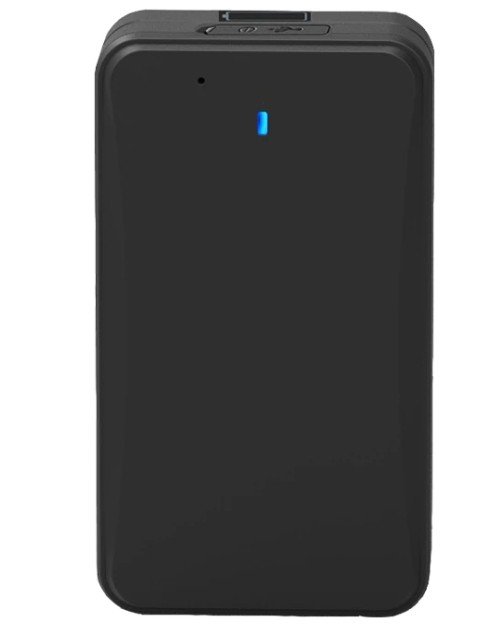 In Australia, we regularly use brand names to explain a selected type of factor. For instance, Bobcat is a skid steer, Posi Track is a monitor-wheeled front-end loader, and Panadol is paracetamol. GPS tracking isn't any different as a result of GPS (Global Positioning System) is a single technology owned and operated by the US Government by way of NASA. While you purchase something with GPS, it probably has many other location-based mostly technologies run by numerous governments worldwide. GLONASS (Russian Federation), Beidou (China) and Galileo (European Union). Often when wanting on the specs of your gadget that comprises satellite tv for pc location-based applied sciences, it's going to say GNSS (Global Navigation Satellite System), and when it determines its location, it's going to hearken to satellites owned by the USA, Russia, China and the EU. Telematics shouldn't be nearly getting the location of one thing it’s about remotely connecting to an asset and getting meaningful knowledge from it. This data may very well be location, pace, elevation, if the ignition is turned on, if the engine is operating if there are any faults, and extra. More often than not, your telematics machine has GNSS however may have digital inputs, CANBUS, analogue inputs and, in some cases, other wireless applied sciences corresponding to 4G/5G, WiFi, Bluetooth, and LoRaWAN. These inputs and connection strategies make it easier to make extra knowledgeable selections about your property.
If you remember the digital actuality (VR) hype extravaganza in the early 1990s, you probably have a really particular thought of what digital actuality gear contains. Back then, iTagPro Device you might see head-mounted shows and energy gloves in magazines, on toy shelves and even in movies -- the whole lot appeared futuristic, excessive tech and very bulky. It has been greater than a decade since the initial media frenzy, and whereas other technology has superior by leaps and bounds, iTagPro Device much of the equipment utilized in digital actuality functions seems to have stayed the same. Advances are sometimes the result of other industries, like navy functions or even leisure. Investors not often consider the digital reality field to be vital enough to fund projects unless there are particular purposes for the analysis related to other industries. What sort of equipment does VR depend on? Depending on how loosely you outline VR, it might only require a pc with a monitor and a keyboard or a mouse.
Most researchers working in VR say that true virtual environments give the person a sense of immersion. Since it is simple to get distracted and lose your sense of immersion when taking a look at a primary computer screen, most VR systems depend on a extra elaborate display system. Other fundamental units, like a keyboard, mouse, joystick or controller wand, are sometimes a part of VR techniques. In this article, we'll look at the various kinds of VR gear and their benefits and disadvantages. We'll start with head-mounted displays. Most HMDs are mounted in a helmet or a set of goggles. Engineers designed head-mounted shows to ensure that irrespective of in what direction a person may look, a monitor would stay in front of his eyes. Most HMDs have a display screen for every eye, which gives the consumer the sense that the photographs he is taking a look at have depth. The monitors in an HMD are most often Liquid Cystal Displays (LCD), though you might come throughout older fashions that use Cathode Ray Tube (CRT) shows.
 LCD screens are more compact, lightweight, environment friendly and cheap than CRT displays. The 2 main advantages CRT shows have over LCDs are screen decision and brightness. Unfortunately, CRT displays are often bulky and heavy. Almost every HMD using them is either uncomfortable to put on or requires a suspension mechanism to help offset the weight. Suspension mechanisms restrict a user's movement, which in turn can impact his sense of immersion. There are various reasons engineers hardly ever use these show technologies in HMDs. Most of these applied sciences have limited decision and brightness. Several are unable to supply anything other than a monochromatic picture. Some, like the VRD and plasma display technologies, would possibly work very nicely in an HMD but are prohibitively expensive. Many head-mounted shows embody audio system or headphones in order that it could present each video and audio output. Almost all refined HMDs are tethered to the VR system's CPU by a number of cables -- wireless methods lack the response time necessary to keep away from lag or latency issues.
댓글목록
등록된 댓글이 없습니다.